














Solana and Ethereum are two of the most widely held coins, and both work for paying for a server. They behave very differently when it comes to speed and fees. This guide helps you choose and shows the steps for each.
Solana (SOL)
Solana transactions confirm in seconds and cost a tiny fraction of a cent in network fees. That makes SOL good for small top-ups and for paying quickly when you need a server now.
- Send SOL from a wallet such as Phantom or Solflare, or withdraw from an exchange.
- Paste the deposit address from the top-up page and send the exact amount.
- Keep a small SOL balance for fees and account rent. Most payments do not need more than that.
Ethereum (ETH)
ETH is widely supported and secure, but network fees swing with demand. A transfer that costs very little on a quiet day can cost noticeably more when the network is busy. If you pay with ETH, check the gas price first and send when it is low.
- Send on the Ethereum mainnet, not on a layer 2 network, unless the top-up page lists it.
- Check the address and the amount, then set a normal gas price. Very low gas can leave the transaction pending for a long time.
- Wait for the confirmations shown on the invoice.
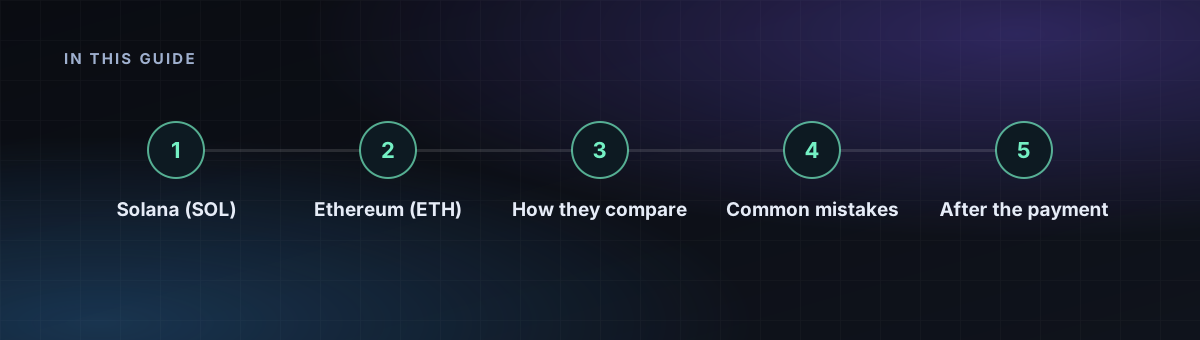
How they compare
| Solana | Ethereum | |
|---|---|---|
| Speed | Seconds | Minutes |
| Network fee | Very low | Varies with demand |
| Good for | Small, fast top-ups | Holders who already have ETH |
| Watch out for | Wrong token on the right network | High gas, wrong network |
Common mistakes
- Sending a token (for example USDC on Solana) when the invoice asks for the native coin.
- Using a different network from the one on the invoice.
- Paying from an exchange that deducts its fee from the amount.
After the payment
Once the payment confirms, the balance is added to your account and you can order. The product pages for Solana and Ethereum list plans and accepted options.